“My will to survive exceeds almost everybody else's will to kill me.”
Jensen Huang said that years ago. I've thought about it a lot this week.
On November 12, NVIDIA announced that Jensen had resigned as CEO, 33 years after he co-founded the company in a booth at a Denny's in San Jose. The company is now run by its CFO, Colette Kress, as interim CEO. The board's own investigation hasn't published a single finding. It let him go anyway.
I think that was a grave mistake. He should be reinstated, and he should be reinstated now.
- Co-founded
- April 1993
- As CEO
- 33 years
- Out
- Nov 12, 2026
- Interim CEO
- Colette Kress
Four days
The timeline matters, so here it is.
- Nov 8
- Board opens an inquiry and backs him
- Nov 11
- Board accepts his resignation
- Nov 12
- Announced. Stock closes −4.3%
- Nov 17
- First earnings call without him
On November 8, after reports that Jensen had been the target of a foreign intelligence effort, NVIDIA's board announced an independent investigation, overseen by independent directors with outside counsel. In that same statement, the board said it had no reason to believe NVIDIA's trade secrets or national security had been compromised, that Jensen fully supported the review, and that it had confidence in him and his leadership team.
Three days later, it accepted his resignation. The investigation it launched is still open. Nothing published so far says he leaked anything, broke a law, or harmed the company.
What has come out is about his personal life. He admitted to staff that he had been unfaithful to his wife, and the New York Times has reported a second relationship, with an NVIDIA executive. I'm not going to pretend any of that is fine. It isn't. If the investigation finds a real breach, the board should act on it. But that's exactly the point: you act on findings, not ahead of them. You don't hand the most important technology company in the world to an interim CEO while the facts are still being gathered.
Why I care
I was about 13 when I started following Jensen. Back then most people knew NVIDIA as a gaming company, the logo on the box of a graphics card. Then I watched him bet the company on CUDA when nobody else cared about GPUs for anything but games, and keep betting on it for years until AI caught up to him.
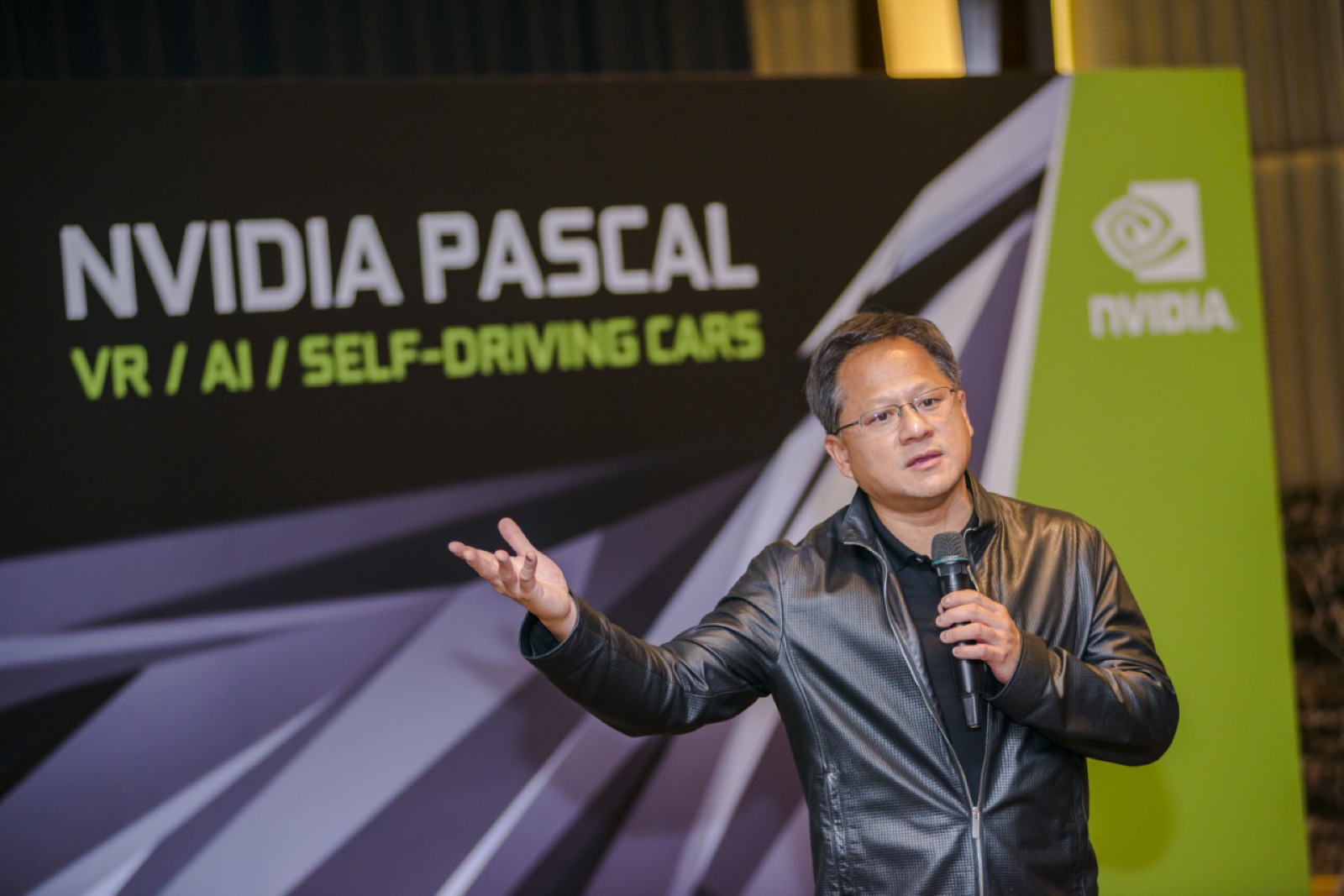
Somewhere along the way my dad and I started making investment decisions about NVIDIA together. We weren't only betting on the chips. We were also betting on him. At least I was. I'm not that financially literate, and I couldn't have told you much about NVIDIA's margins. But I didn't need a spreadsheet to see who was steering the company. That bet worked out for us.
So when people talk about NVIDIA as if it's a machine that runs on its own, I don't buy it. NVIDIA is what it is because one person refused to quit on an idea for three decades.
NVIDIA is Jensen. Jensen is NVIDIA.
That isn't a slogan. It's the company's actual history.
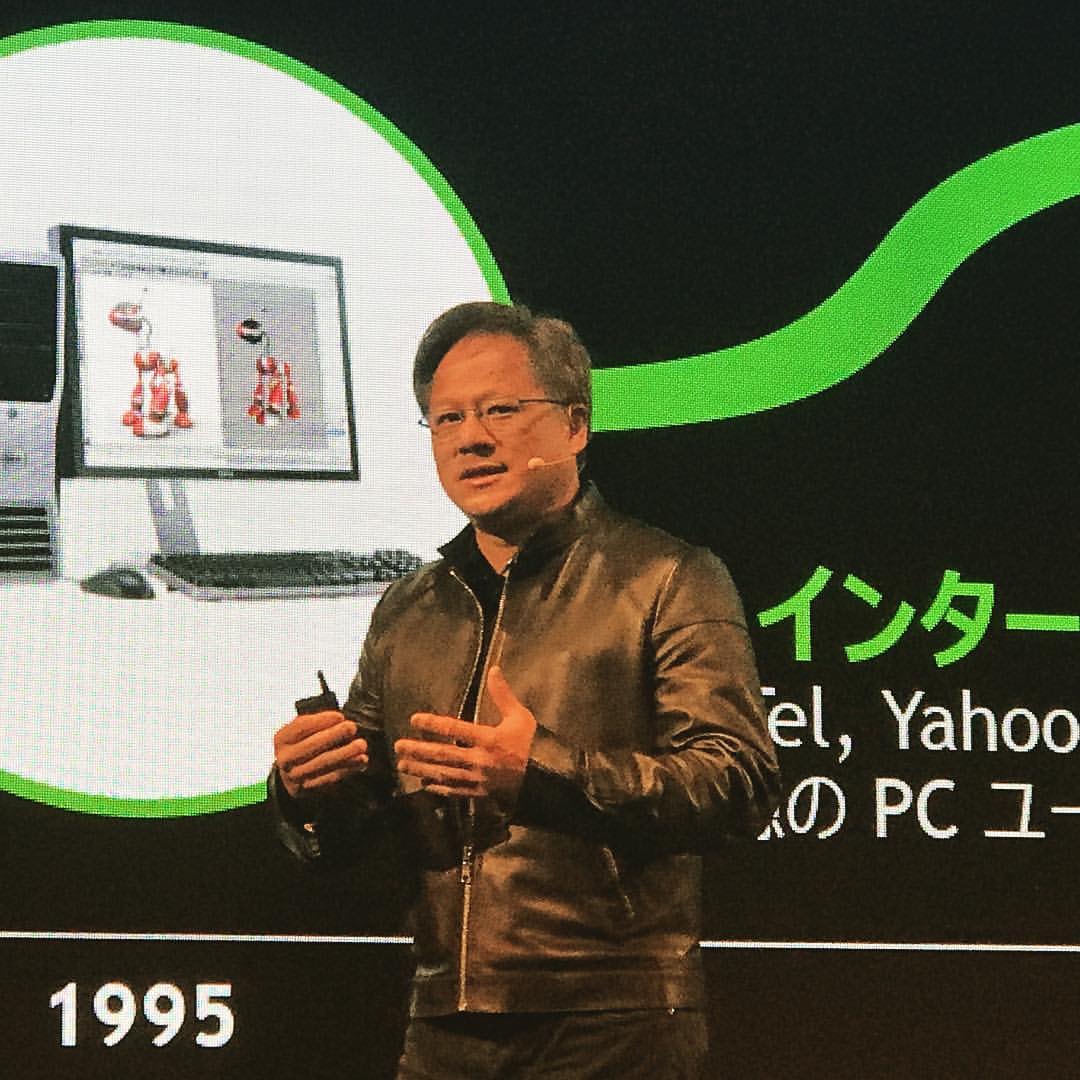
Jensen co-founded NVIDIA in April 1993 with Chris Malachowsky and Curtis Priem. He was 30. The company's first chip, the NV1, flopped. By 1997 NVIDIA was down to roughly a month of payroll, close enough to the edge that its unofficial motto became “Our company is thirty days from going out of business.” The RIVA 128 saved it. Two years later, the GeForce 256 launched as what NVIDIA called the world's first GPU.
Then, in 2006, he made the call that built the company we know today: CUDA, a way to program a graphics chip like a general-purpose computer. For years it cost money and earned almost nothing back, because hardly anyone outside a few research labs wanted it. He kept funding it anyway.
In 2012, researchers in Toronto trained a neural network called AlexNet on two NVIDIA gaming cards and won the ImageNet competition by a landslide. Modern AI ran on a bet Jensen had made six years earlier. In 2016, he personally delivered the first DGX-1 supercomputer to a small nonprofit called OpenAI.
He still ran the place like a founder. He has said he has around 60 direct reports and skips one-on-ones so information reaches him without layers of management in between. He has the NVIDIA logo tattooed on his arm. This week, Wall Street analysts described him as a singular figure with dozens of direct reports, and said his absence leaves a void that clouds NVIDIA's long-term outlook.
You can search for a new CEO. You can't search for a founder who spent 33 years building the thing.
This is not Apple
The most common argument I've heard for why NVIDIA will be fine goes like this: Apple lost Steve Jobs, handed the company to an operations guy, and became worth trillions. So why can't NVIDIA?
Because this is not Apple.
When Tim Cook took over in 2011, Apple's products were already defined. The iPhone existed. The ecosystem existed. Jobs had spent his last years shaping the product culture and picked his own successor. What Apple needed next was someone to run the best supply chain in the world, and Cook was exactly that person.
NVIDIA doesn't sell a finished product to loyal customers who upgrade every few years. It sells the frontier, and it redraws the frontier every year. Blackwell, then Vera Rubin, which is shipping now, then Rubin Ultra in 2027 and Feynman in 2028. Each one is a multibillion-dollar engineering bet made years before anyone knows if it was right. Whoever makes those calls has to understand the chips, the software, the networking and where AI research is heading, all at the same time.
Colette Kress is, by every account, an excellent CFO. She has held the job since 2013, and analysts have called her appointment “constructive.” But she is a finance executive. NVIDIA cannot survive at the frontier without a technical CEO. An interim leader from finance is built to protect the quarter, and NVIDIA's entire history is about sacrificing quarters for a decade. Early reporting already suggests she's taking a harder line than Jensen did on some of NVIDIA's biggest AI deals, including its commitments to OpenAI.
And Apple is also the cautionary tale people skip. In 1985, Apple's board pushed Steve Jobs out. Twelve years later the company was close to bankruptcy, and it brought him back. The happy Tim Cook ending only exists because the board first admitted it had been wrong.
If you want a closer parallel, look at Intel. In 2018, Intel's CEO Brian Krzanich resigned after the board learned of a past consensual relationship with an employee. The CFO, Bob Swan, became interim CEO, then permanent CEO. Swan was a capable finance executive. Under him, Intel's next manufacturing node slipped badly and it lost its lead to TSMC. In 2021 the board brought in an engineer, Pat Gelsinger, to fix it. Intel has spent the years since trying to get that lead back.
A personal scandal, a fast exit, the CFO in charge. That's the sequence NVIDIA's board just started.
What the market is saying
Investors have already voted, and not quietly.
- Nov 12 close
- −4.34%
- Nov 12 volume
- 5× normal
- Nov 6 → 13
- ≈ −13%
- Value lost
- ≈ $570B
On the day the board announced his exit, NVIDIA was down as much as double digits before closing 4.34% lower at $166.19, on more than five times its normal trading volume. It fell another 2% the next day to $162.85. From its close on Friday, November 6, before the board's first statement, to this Friday, that's roughly 13%, about $570 billion in market value, gone in a week.
Then came the analysts. Bernstein downgraded the stock and halved its price target, from $400 to $200. HSBC downgraded it to Hold and cut its target from $375 to $170, saying it expects the stock to struggle until NVIDIA names a permanent CEO. Dan Ives, one of the most-followed tech analysts on Wall Street, had already modelled this scenario before it happened: $300 with Jensen, $225 without him.
Read that last one again. One of the most-watched analysts in tech had a number for what NVIDIA is worth without Jensen, and it was 25% lower. That is what key-person risk looks like when someone actually puts a price on it.
To be fair, not all of NVIDIA's slide is about Jensen. The stock was already well off its 52-week high of $243.37, and export rules, AI spending and competition all matter. But the timing isn't subtle, and neither is HSBC's reasoning. The market isn't worried about NVIDIA's chips. It's worried about who decides what the next ones are.
For a sense of what he built: NVIDIA went public in January 1999 at $12 a share. Adjusted for every split since, that's about 2.5 cents. Even at Friday's close, a share bought at the IPO is worth roughly 6,500 times what it cost, so $1,000 at the IPO is around $6.5 million today. One CEO ran the company for that entire stretch.
What the board got wrong
None of what has come out shows he hurt the company, its products, or its shareholders. The people closest to the work seem to agree. An internal post by a longtime NVIDIA engineer, asking the board to weigh what employees think, has drawn more than 1,600 comments, most of them reportedly calling for him to come back. “Bring back THE boss” is the line that keeps showing up. These are the people who work with him every day. They know who built that place, and they're telling the board it got this wrong.
We've seen this before, and recently. In November 2023, OpenAI's board fired Sam Altman. Within days, more than 700 of its roughly 770 employees signed a letter threatening to leave, and he was back within a week. Whatever you think of that episode, it showed one thing: when a board removes the person a company is built around, the company pushes back.
It isn't only employees. Elon Musk, who has never been shy about criticising other CEOs, said a petition to reinstate Jensen was underway and that he's signing it too.
The case against me
The strongest argument on the other side is a serious one, so I want to deal with it directly.
It goes like this: the CEO of a company at the center of US national security reportedly had a relationship with a woman US intelligence believes was targeting him for China, and separately with an executive at his own company. Three House committees want him to testify. Even if nothing leaked, the board had to show that nobody is above the rules.
I take that seriously. But look at what the board itself said: no reason to believe trade secrets or national security were compromised. Even the President has said it isn't yet clear whether the woman at the center of this was actually a spy. The right response to a possible risk is the investigation the board already started, with independent directors and outside counsel. Let it finish. If it finds a breach, act. If it doesn't, the board will have removed the most important founder in tech over a news story rather than a finding.
And if the problem is governance, fix the governance. Add oversight. Put conditions on his return. There's a lot of room between “no consequences” and “show the founder the door before the facts are in.”
Why this is bigger than NVIDIA
This is the part I don't think enough people are talking about.
Venture investors, founders and chip-industry insiders are now worried that NVIDIA will slow its aggressive AI investment strategy without him, putting billions in startup funding and credit guarantees at risk. NVIDIA has been backing so much of the AI buildout that people have started calling it the central bank of AI. This week, the central bank lost its chair.
That matters because of something Evan Conrad laid out in The end of startups. The world's compute is sold out. To get capacity, you sign up for a new cluster, and the people financing those clusters want tenants who are investment grade. Startups aren't. So startups get asked for bigger and bigger upfront payments, sometimes 100% of the contract before they get a single GPU hour.
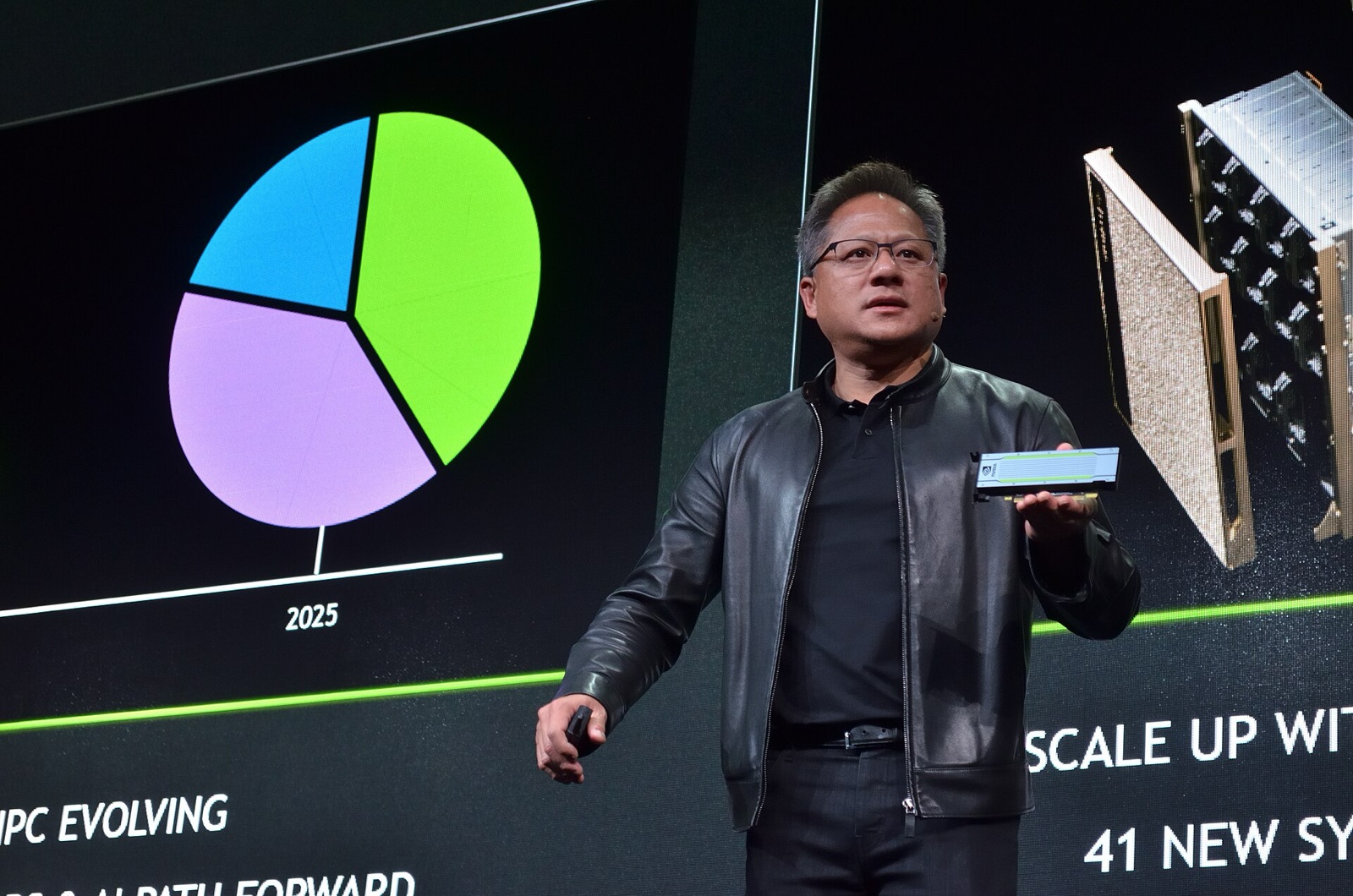
Then it compounds. If you have credit, you get compute. If you get compute, you build better products faster, make more money, and get better credit. A Fortune 500 company can spend a billion dollars on tokens in a few days. A startup has to raise that billion before its product even exists.
Jensen's NVIDIA was one of the few players willing to back startups anyway. Take him out, pull that support, and the credit bottleneck gets tighter. Big companies keep getting compute. Founders get locked out.
I'm a student who builds things at hackathons and wants to start companies. That's the world I'm about to walk into, and it just got harder because of one board decision.
Bring him back
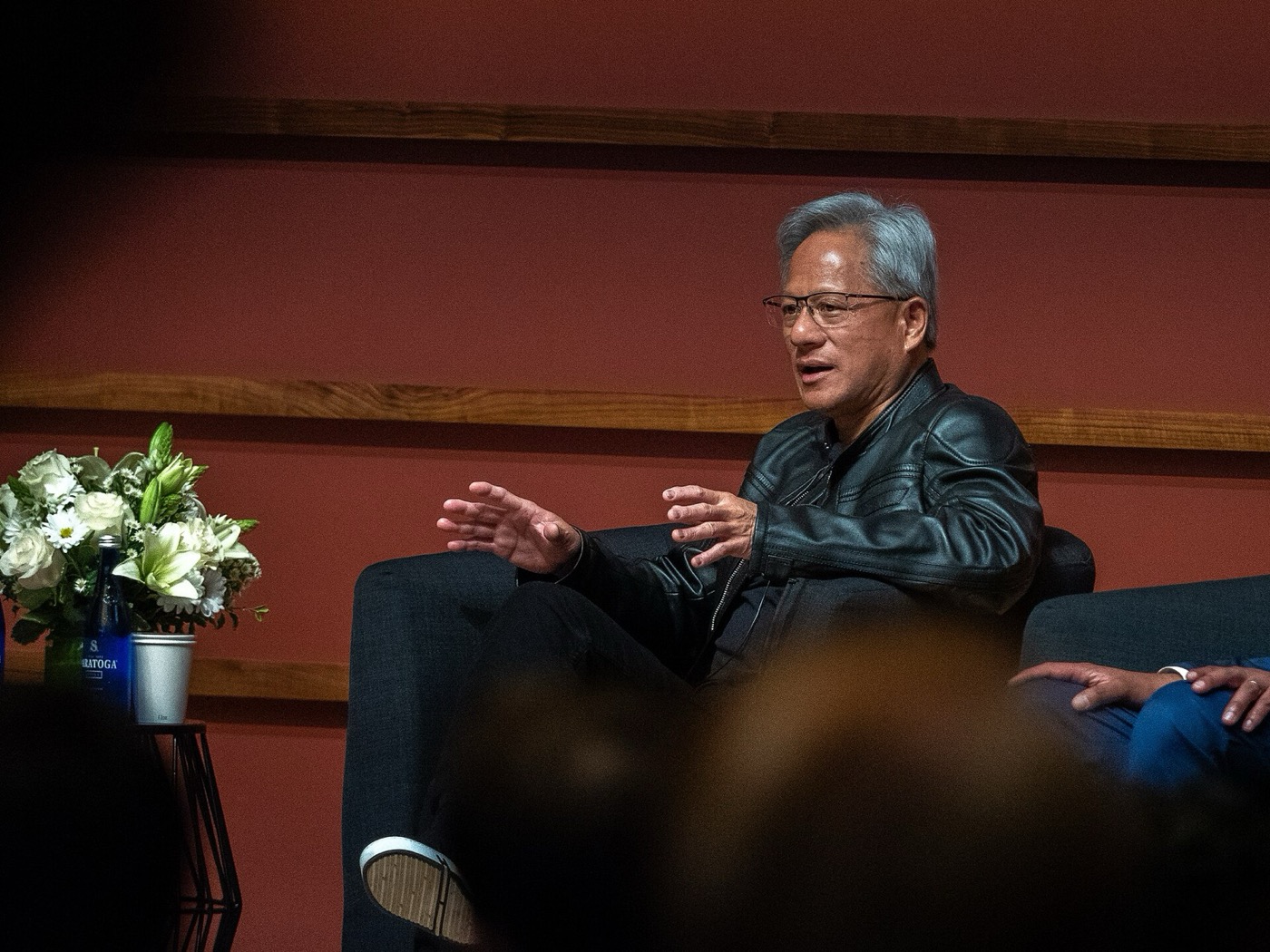
Jensen once said his will to survive exceeds almost everybody else's will to kill him. I believe that. I just don't think he should have to prove it again, this time against his own board.
NVIDIA's first earnings call without him is on November 17. The board still has time to fix this before then.
Reinstate Jensen. Today.
If you agree, add your name at standwithjensen.com.
Sources: NVIDIA board statement, Nov 8 · NVIDIA 8-K · CNN · NBC News · Motley Fool, Nov 12 · Motley Fool, Nov 13 · Yahoo Finance · Daring Fireball · Benzinga